
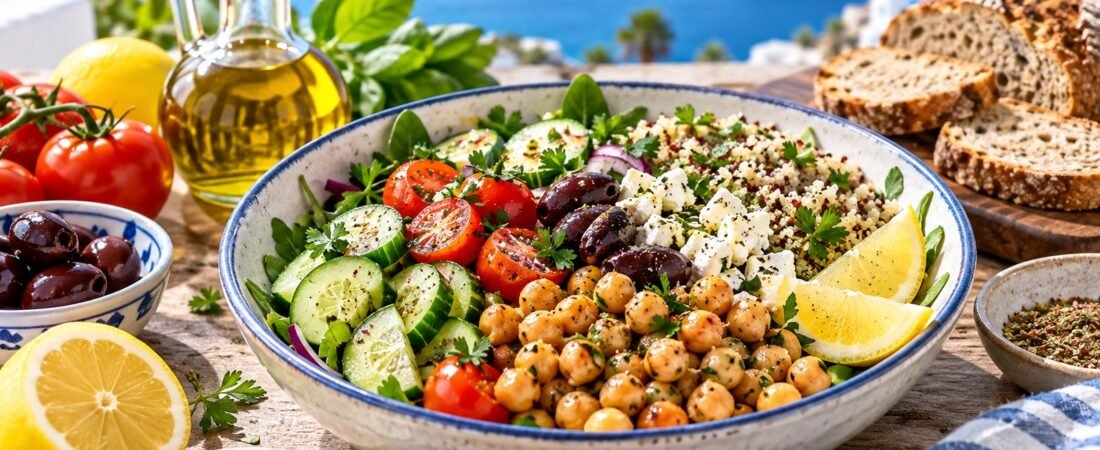
You don’t need a shelf full of specialty ingredients to try Mediterranean-style eating. A bag of oats, a few cans of beans, frozen vegetables, olive oil, and foods you already enjoy can get you started.
The idea is to build more meals around plants, use unsaturated fats, and make room for fish and other protein foods. This seven-day plan turns that idea into breakfasts, lunches, and dinners you can make in an ordinary kitchen. It repeats ingredients, uses leftovers, and offers swaps so your first week feels manageable.
Start here: Choose two breakfasts you like, prepare a pot of lentil soup, and plan your first three dinners. You can build the rest of the week from there.
What is the Mediterranean diet?
The Mediterranean diet is an eating pattern inspired by traditional diets around the Mediterranean Sea. It isn’t one fixed menu, and it doesn’t require eating only Greek or Italian food.
The American Heart Association’s overview emphasizes vegetables, fruit, whole grains, beans, nuts, and olive oil, with fish, poultry, eggs, and dairy in moderate amounts. Red and processed meats, refined grains, and foods high in added sugar are less central.
You can follow the same principles with familiar foods: bean tacos with vegetables, lentil stew, oatmeal with fruit, or brown rice with fish. The pattern matters more than a particular cuisine.
Foods to put on your regular shopping list
- Vegetables and fruit: Fresh, frozen, or canned options that fit your budget.
- Beans and lentils: Chickpeas, white beans, and brown or red lentils.
- Whole grains: Oats, brown rice, whole-wheat bread, and whole-wheat pasta.
- Unsaturated fats: Olive oil and unsalted nuts or seeds, if safe for you.
- Protein foods: Fish, eggs, chicken, tofu, and legumes.
- Dairy or alternatives: Plain yogurt or an unsweetened, fortified alternative that meets your needs.
You do not need supplements, a detox drink, or expensive branded products to use this menu.
What does the research actually show?
One important study is the 2018 reanalysis of the PREDIMED trial. It studied older adults in Spain who had high cardiovascular risk but no cardiovascular disease at enrollment. Participants assigned to Mediterranean-style diets supplemented with extra-virgin olive oil or nuts had fewer combined major cardiovascular events than the comparison group advised to reduce dietary fat.
That finding needs context. Researchers republished the trial after discovering departures from the intended randomization procedures. It also tested a supported dietary program over years, not this seven-day menu or olive oil added to an otherwise unchanged diet.
A 2019 Cochrane review found uncertainty about several cardiovascular outcomes and rated much of the evidence as low or moderate quality. The review is useful context, not a complete account of all research published since 2019.
The practical takeaway is to use Mediterranean-style eating as a sustainable approach to food choices. It cannot guarantee disease prevention, replace prescribed treatment, or promise a particular amount of weight loss.
How to use this seven-day meal plan
This is an original meal-planning example for one adult, not a prescribed calorie level or a nutritionally analyzed therapeutic diet. The portions below are starting points for assembling meals. Adjust them for appetite, activity, dietary needs, and your clinician’s advice.
At a main meal, try combining vegetables, a protein food, and a grain or other starch. Examples include about 3/4 to 1 cup of cooked beans, or a roughly 3- to 4-ounce cooked fish or chicken portion, alongside vegetables and about 1/2 to 1 cup of cooked grain. You may need more food than these examples provide. Don’t use the plan to ignore hunger or skip needed meals.
Optional snacks: Fruit with yogurt; vegetables with hummus; whole-grain toast; or a small handful of unsalted nuts, if tolerated. Add snacks or larger meals when you need them. Water is the default beverage, not a required fluid prescription.
A short prep session before Day 1
- Make four servings of lentil-vegetable soup for Days 1, 2, 4, and 7. Refrigerate the first two; freeze the later servings promptly.
- Cook brown rice for Days 1 and 2. Prepare another small batch midweek rather than keeping a full week’s cooked rice in the refrigerator.
- Wash the vegetables you’ll use early in the week and keep salad dressing separate.
- Portion oats for easy breakfasts. Put the fish needed later in the week in the freezer and thaw it safely in the refrigerator before cooking.
Your simple 7-day Mediterranean diet meal plan
Day 1: Start with pantry staples
Breakfast: Cook 1/2 cup dry oats with milk or an unsweetened fortified alternative. Add a banana and, if safe, a spoonful of chopped walnuts.
Lunch: Lentil-vegetable soup with whole-grain toast and an apple. Use lentils, canned tomatoes, onion, carrot, and spinach for the soup.
Dinner: Baked salmon, brown rice, and broccoli. Season with lemon, pepper, and a little olive oil. Cook enough rice for tomorrow’s lunch.
Easy swap: Replace salmon with tofu or white beans if you don’t eat fish.
Day 2: Make a satisfying bean bowl
Breakfast: Plain yogurt with berries and a few spoonfuls of oats. Add whole-grain toast if you want a larger breakfast.
Lunch: A chickpea bowl with cucumber, tomato, brown rice, and lemon-olive oil dressing. Use roughly 3/4 to 1 cup chickpeas and add a small amount of feta if desired.
Dinner: The second refrigerated serving of lentil soup, with a side salad and whole-grain bread. Add more beans or bread if the meal is too small for you.
Recipe idea: PromaxHealth’s 15-Minute Mediterranean Chickpea Salad offers another way to combine these ingredients. Keep the new guide focused on the weekly pattern; the linked recipe covers one dish.
Day 3: Use one pan for dinner
Breakfast: Eggs scrambled with spinach, plus whole-grain toast and an orange.
Lunch: Hummus, cucumber, tomato, and lettuce in a whole-wheat pita. Add a side of white-bean salad for a more substantial meal.
Dinner: Roast chicken with carrots, onion, and broccoli; serve with brown rice. Set aside one properly refrigerated chicken portion for Day 4 lunch.
Easy swap: Roast tofu instead of chicken. Hummus can be replaced with mashed white beans if sesame is unsuitable.
Day 4: Turn leftovers into a fresh meal
Breakfast: Oatmeal with apple, cinnamon, and yogurt on the side.
Lunch: Yesterday’s chicken or tofu over lettuce, cucumber, and tomato, with whole-grain bread and lemon dressing.
Dinner: A frozen serving of lentil soup, thawed in the refrigerator and reheated thoroughly, with a baked potato and sautéed spinach.
Prep note: Cook a small batch of rice for Day 5, or use plain ready-to-heat brown rice.
Day 5: Try a second fish meal
Breakfast: Plain yogurt, banana, and whole-grain toast with peanut butter, if safe for you.
Lunch: A white-bean and vegetable rice bowl. Add chopped tomato, cucumber, lemon, and herbs.
Dinner: Baked trout with broccoli and brown rice. Frozen fish works well here; follow its cooking instructions and check doneness with a food thermometer.
Easy swap: Use another salmon portion or a bean-and-vegetable skillet.
Day 6: Keep weekend cooking simple
Breakfast: Eggs, whole-grain toast, and fruit.
Lunch: A chickpea-and-hummus pita with cucumber, lettuce, and tomato. Skip hummus if you prefer a simpler chickpea salad filling.
Dinner: Whole-wheat pasta with white beans, canned tomatoes, spinach, garlic, and olive oil. Make two servings and refrigerate tomorrow’s portion promptly.
Flavor tip: Lemon, garlic, oregano, and black pepper can keep the dish interesting without relying on a salty sauce.
Day 7: Finish with foods you’ve already prepared
Breakfast: Oatmeal with berries and yogurt.
Lunch: Yesterday’s pasta, reheated thoroughly, with a fresh side salad.
Dinner: The final frozen portion of lentil soup, reheated after safe thawing, with whole-grain toast and fruit. Add yogurt or extra bread if you need a larger meal.
Next-week step: Pick your three favorite meals to repeat. There is no need to create a completely different menu every week.
Shopping list for one adult
These approximate quantities support the example menu, with some pantry ingredients left over. Check what you already have and scale up for larger appetites or additional people. Package sizes and snack choices will change what you need.
| Group | Approximate shopping quantities |
|---|---|
| Fruit | 4 bananas, 4 apples, 2 oranges, and one 12- to 16-ounce bag of frozen berries; add extra fruit for snacks |
| Vegetables | 2 cucumbers, 1 pint cherry tomatoes plus 3 medium tomatoes, 1 head lettuce, 2 onions, 1 pound carrots, one 12- to 16-ounce bag spinach, two 12- to 16-ounce bags broccoli, 1 potato, 3 lemons, and garlic |
| Beans and lentils | 3 cans chickpeas and 3 cans white beans, about 15 ounces each; 1 cup dry lentils for a four-serving soup batch |
| Grains | 1 small container oats, 1 pound brown rice, 1 loaf whole-grain bread, 1 package whole-wheat pitas, and 1 package whole-wheat pasta |
| Protein and dairy | Two fish portions of about 4 ounces each, enough chicken or tofu for dinner plus one lunch, 4 eggs, one 32-ounce tub plain yogurt, milk or a suitable fortified alternative, and a small tub hummus |
| Pantry and optional extras | 2 large cans tomatoes, olive oil, cinnamon, oregano, pepper, low-sodium broth or water, and optional walnuts, peanut butter, or feta |
For a fully vegetarian week, replace the fish and chicken with tofu or extra beans. Check the substitutes’ labels and your own dietary needs rather than assuming all alternatives have the same nutrients.
Budget tips that make the plan easier to keep
The USDA’s budget-eating guidance supports planning around your budget and using beans and canned or frozen vegetables. Apply that to this menu:
- Shop your kitchen first. Cross oats, rice, oil, and seasonings off the list if you already have them.
- Compare unit prices. A larger package only saves money if you’ll use it before it spoils.
- Use plain frozen produce. Buy the vegetable you’ll actually eat, not the one a recipe insists on.
- Skip specialty grains. Brown rice and oats work here; you don’t need several different grains.
- Repeat breakfasts. Preparing the same two options is easier than buying seven sets of ingredients.
- Make fish flexible. Compare frozen portions and canned salmon with fresh fish. Beans can replace a fish meal when cost is the priority.
- Freeze bread in slices. Take out what you need instead of losing the end of the loaf.
There is no reliable universal weekly price for this plan. Your location, store, package sizes, and pantry supplies determine the cost.
Safety and dietary adjustments
Allergies and medical conditions
This menu includes common allergens such as milk, eggs, fish, wheat, peanuts, tree nuts, soy, and sesame, depending on your choices. Read labels, account for cross-contact, and make substitutions appropriate to your allergy plan.
If you have a medically prescribed diet, kidney disease, diabetes treated with medication, pregnancy-related needs, or a history of an eating disorder, ask your clinician or registered dietitian to adapt the menu. Do not change medication or prescribed nutrition targets to follow this article.
Choose fish carefully and skip alcohol for health benefits
The FDA/EPA fish guidance lists salmon and trout among lower-mercury choices. People who are pregnant, might become pregnant, or are breastfeeding should follow its specific portions and frequency advice, rather than treating this example menu as a complete pregnancy diet.
Wine is not required. The American Heart Association does not recommend starting alcohol for possible health benefits. Choose an alcohol-free drink you enjoy.
Keep meal prep safe
According to FoodSafety.gov, refrigerate perishables within two hours, or within one hour when temperatures exceed 90°F. Use shallow containers, keep the refrigerator at 40°F or below, and reheat leftovers to 165°F. Its storage chart generally allows three to four refrigerated days for soups and cooked poultry leftovers.
That is why this plan freezes later-week soup portions instead of keeping Sunday’s batch refrigerated all week. Use a food thermometer: FoodSafety.gov’s cooking chart lists 165°F for chicken and 145°F for fish. Cook eggs until the white and yolk are firm. Reheating guidance is not a substitute for cooking raw foods properly in the first place.
Frequently asked questions
Can I eat bread and pasta on the Mediterranean diet?
Yes. Whole-grain bread and pasta fit this eating pattern. Choose amounts that suit your needs and pair them with vegetables and protein foods rather than treating them as an unlimited side dish.
Do I have to eat fish?
No. You can organize Mediterranean-style meals around beans, lentils, and tofu. A fish-free menu has a different nutrient mix, so get personalized advice if you have specific nutritional requirements.
Will this seven-day plan help me lose weight?
It is not a weight-loss prescription. Portions, overall intake, activity, health conditions, and other factors affect weight. This menu’s calories have not been calculated, and no amount of weight loss is promised.
Is olive oil unlimited?
No food becomes unlimited because it fits an eating pattern. Use olive oil to dress or cook food in amounts that work for your meal and needs.
Can I repeat meals or move the days around?
Yes. Repeat meals you enjoy and swap days, while keeping track of when refrigerated foods were prepared. Freeze foods that won’t be eaten within their safe storage window.
A first week you can build on
Your goal isn’t to complete a perfect menu. It is to find a few meals you enjoy, learn which ingredients you can reuse, and make the next week easier. Start with one bean-based lunch, one breakfast you can prepare quickly, and a dinner built around vegetables. Repeat what works and adapt the rest.
This article provides general educational information, not individualized medical or nutrition advice.
Sources
- American Heart Association. What is the Mediterranean Diet?
- Estruch R, et al. Primary Prevention of Cardiovascular Disease with a Mediterranean Diet Supplemented with Extra-Virgin Olive Oil or Nuts. New England Journal of Medicine. 2018;378:e34. doi:10.1056/NEJMoa1800389. Reanalyzed publication.
- Rees K, et al. Mediterranean-style diet for the primary and secondary prevention of cardiovascular disease. Cochrane Database of Systematic Reviews. 2019;3:CD009825. doi:10.1002/14651858.CD009825.pub3.
- USDA MyPlate. Eat Healthy on a Budget.
- FDA/EPA. Advice about Eating Fish.
- American Heart Association. Is drinking alcohol part of a healthy lifestyle?
- FoodSafety.gov. Game Day Food Safety Tips, Cold Food Storage Chart, and Safe Minimum Internal Temperatures.