
By PromaxHealth Editorial Team. Prepared with AI assistance and checked against the linked FDA, CDC, Dietary Guidelines for Americans, American Heart Association (AHA), NHLBI and MedlinePlus sources. This article has not received independent clinical review.
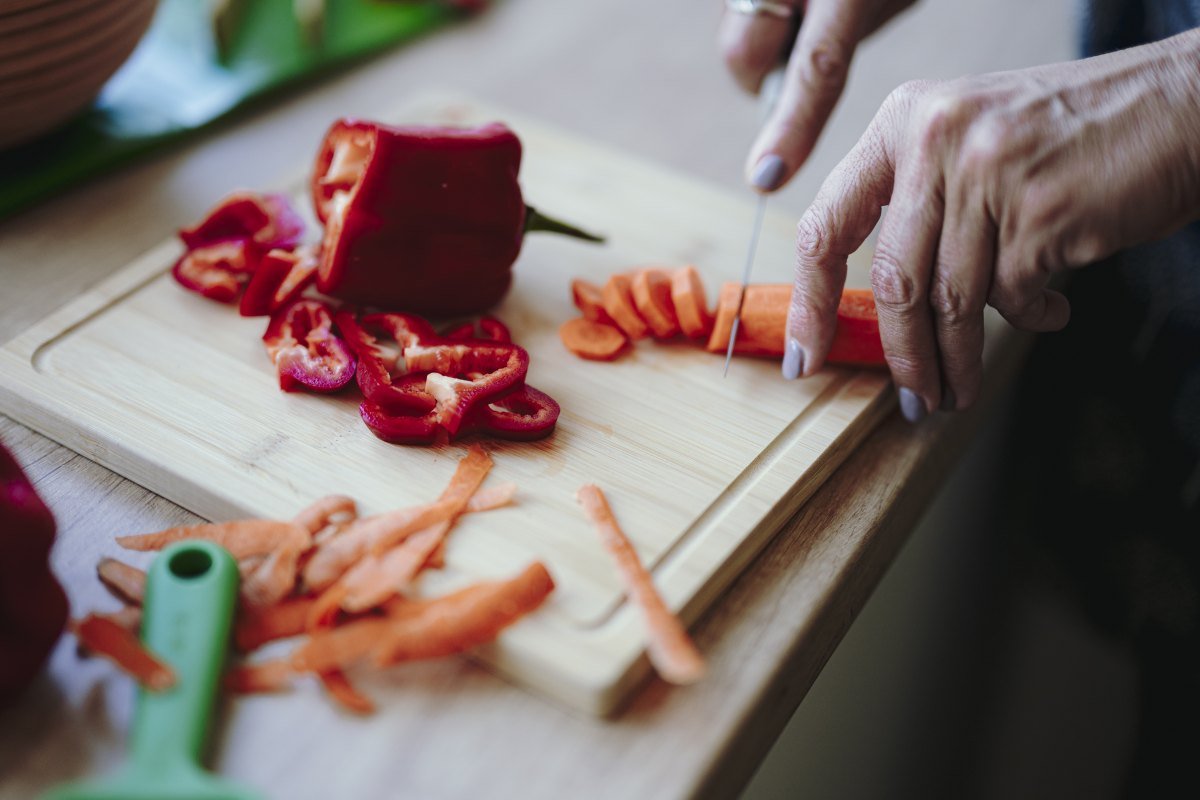
Image: “Chopping red bell pepper and carrot in a kitchen” by Shixart1985, via Wikimedia Commons, licensed under CC BY 2.0; cropped and resized.
Easy lower-sodium meals start with a simple idea: most of the sodium you eat is already in food before it reaches your plate. Cutting back is less about giving up the salt shaker and more about choosing which packaged and restaurant foods you eat, reading labels, and building flavor in other ways.
This beginner’s guide explains how much sodium is recommended, where it hides, how to compare labels, simple swaps at the store, at home and when eating out, and three flexible meal templates. It is general education for healthy adults. If you have high blood pressure, heart failure, kidney disease or another condition, follow the eating plan your health care team gives you.
How much sodium is recommended?
The Dietary Guidelines for Americans, 2025–2030, say the general population ages 14 and above should consume less than 2,300 mg of sodium per day. Limits for children are lower: less than 1,200 mg a day at ages 1–3, less than 1,500 mg at ages 4–8 and less than 1,800 mg at ages 9–13. Dietary Guidelines for Americans, 2025–2030 (PDF)
The American Heart Association recommends no more than 2,300 mg a day and moving toward an ideal limit of no more than 1,500 mg a day for most adults. It adds that even cutting back by 1,000 mg a day can help improve blood pressure and heart health. AHA: 7 salty sodium myths busted
Most people eat far more than that. The CDC reports that Americans consume more than 3,300 mg of sodium per day on average, well above the federal recommendation of less than 2,300 mg for teens and adults. CDC: About sodium and health
Salt and sodium are not the same thing
Table salt is sodium chloride. The CDC explains that it is 40% sodium and 60% chloride, and that one teaspoon of table salt contains about 2,400 mg of sodium. CDC: About sodium and health The FDA rounds this slightly differently and describes the 2,300 mg limit as equal to about 1 teaspoon of table salt. FDA: Sodium in your diet Either way, a single level teaspoon of salt is roughly a whole day’s limit.
Why eating less sodium matters
The CDC states that eating too much sodium can increase your blood pressure and your risk for heart disease and stroke. CDC: About sodium and health The FDA adds that uncontrolled high blood pressure can raise the risk of heart attack, heart failure, stroke, kidney disease and blindness. FDA: Sodium in your diet
This is not only relevant to people who already have high blood pressure. MedlinePlus notes that even people with normal blood pressure will have lower, healthier blood pressure if they lower how much salt they eat. MedlinePlus: Low-salt diet
The NHLBI’s DASH (Dietary Approaches to Stop Hypertension) eating plan is built around 2,300 mg of sodium a day and notes that 1,500 mg lowers blood pressure even further. NHLBI: DASH eating plan The NHLBI describes DASH as a flexible and balanced eating plan that helps create a heart-healthy eating style for life, so lower sodium works as one part of a wider pattern rather than a rule on its own.
Checking your blood pressure at home? Our Black Friday health picks explain what to look for in a validated home monitor.
Where most sodium comes from
According to the AHA, more than 70% of the sodium eaten in the U.S. comes from packaged or restaurant foods, which makes sodium much harder to limit once it is already in the food you buy. AHA: Sodium sources The CDC puts it simply: most sodium comes from packaged and restaurant food, not the saltshaker. CDC: Tips for reducing sodium intake
The CDC lists these as the top sources of sodium for U.S. adults, based on national survey data from 2021–2023:
- deli meat sandwiches;
- soups;
- pizza;
- poultry (excluding nuggets and tenders);
- savory snacks such as chips, crackers and popcorn;
- pasta mixed dishes (excluding macaroni and cheese);
- breads, rolls and buns;
- cheese;
- meat mixed dishes;
- vegetables (excluding white potatoes).
The CDC notes that packaged or processed soups, vegetables and poultry often contain sodium, and suggests looking for no- to low-sodium options. CDC: About sodium and health
Sodium does not always taste salty
Foods that do not taste salty can still be major sources of sodium. The CDC points out that foods with only moderate amounts, such as bread, add up because they are eaten so often. CDC: Tips for reducing sodium intake The FDA gives cereals and pastries as other examples. FDA: Sodium in your diet
Specialty salts are not a shortcut either. The AHA says table salt, kosher salt and most sea salts contain about 40% sodium, and that for heart health it is total sodium intake that matters most, whatever the type of salt. AHA: Sodium sources
How to compare sodium on food labels
The Nutrition Facts label is your best tool for packaged food. The FDA’s general guide is that 5% Daily Value (DV) or less of sodium per serving is low, and 20% DV or more per serving is high. FDA: Sodium in your diet
The CDC recommends checking the sodium per serving and the number of servings per container, then choosing the option with the lowest amount. CDC: Tips for reducing sodium intake If you eat two servings, you get twice the sodium shown. Our guide on how to read nutrition labels walks through serving sizes and %DV step by step with a worked example.
What sodium claims on the package mean
Front-of-package words have defined meanings. The FDA lists them as follows. FDA: Sodium in your diet
| Label claim | What it means |
|---|---|
| Salt-free or sodium-free | Less than 5 mg of sodium per serving |
| Very low sodium | 35 mg of sodium or less per serving |
| Low sodium | 140 mg of sodium or less per serving |
| Reduced sodium | At least 25% less sodium than the regular product |
| Light in sodium or lightly salted | At least 50% less sodium than the regular product |
| No salt added or unsalted | No salt is added during processing, but the product may not be salt- or sodium-free unless stated |
“Reduced sodium” and “light” are comparisons with the regular version of the same product, so a reduced-sodium soup can still be high in sodium. Check the %DV, not just the claim.
Simple swaps that lower sodium
At the store
- Buy fresh, frozen or canned vegetables with no salt or sauce added. CDC: Tips for reducing sodium intake
- Choose packaged foods labeled “low sodium,” “reduced sodium” or “no salt added” when they are available. CDC: Tips for reducing sodium intake
- When possible, buy fresh poultry, fish, pork and meat rather than cured, salted, smoked and other processed meats. CDC: Tips for reducing sodium intake
- Compare similar products, such as two brands of bread, soup or pasta sauce, and pick the one with less sodium per serving.
At home
- Replace or reduce the salt you cook with. The CDC suggests garlic, citrus juice, salt-free seasonings or spices as alternatives. CDC: Tips for reducing sodium intake
- Limit sauces, mixes and instant products, including flavored rice and ready-made pasta. CDC: Tips for reducing sodium intake
- Rinse sodium-containing canned foods such as beans, tuna and vegetables before eating. The FDA says this removes some of the sodium. FDA: Sodium in your diet
- Taste your food before reaching for the salt shaker at the table.
When eating out
- Ask for nutrition information before you order, and choose a lower-sodium meal. CDC: Tips for reducing sodium intake
- Ask that no salt be added to your meal, and keep takeout and fast food to an occasional treat. CDC: Tips for reducing sodium intake
- Request sauces and salad dressings on the side, then use less of them. FDA: Sodium in your diet
- Watch portions: the FDA notes that less food means less sodium, so share a dish or take half home. FDA: Sodium in your diet
Three easy lower-sodium meal templates
These templates are editorial examples that put the swaps above into practice. They are not a medical diet, and we have not calculated their exact sodium content, because that depends on the brands and amounts you use. Check the labels of any packaged ingredients and adjust portions to your needs.
Breakfast: oats, fruit and unsalted nuts
Cook plain rolled oats in water or milk instead of using flavored instant packets, then top with fresh or frozen fruit, cinnamon and a small handful of unsalted nuts. Plain oats let you control what goes in. The FDA advises limiting “instant” products and notes that foods such as cereals and pastries can contain sodium without tasting salty. FDA: Sodium in your diet
Lunch: a build-your-own grain and bean bowl
Start with a whole grain such as brown rice or quinoa cooked without salt. Add rinsed canned beans or no-salt-added beans, plenty of raw or roasted vegetables, and a dressing made from olive oil, lemon juice, garlic and herbs. This replaces a deli sandwich, one of the top sodium sources on the CDC list. Our 15-minute Mediterranean chickpea salad follows a similar pattern; go easy on the added salt and feta (cheese is on the CDC’s top-sources list) and taste before adding more.
Dinner: a sheet-pan meal with fresh protein
Roast fresh fish, chicken or tofu with vegetables such as broccoli, peppers and potatoes. Season with garlic, black pepper, paprika, herbs and a squeeze of lemon instead of a bottled marinade. Our sheet-pan salmon and veggies recipe is a good base; it already relies on garlic, paprika and lemon, so you can cut back on the salt it calls for. For a full week of meals built on similar foods, see our Mediterranean diet 7-day meal plan.
Give your taste buds time
Lower-sodium food may taste flat at first. The FDA notes that if you follow these tips, your taste for sodium will gradually decrease over time, so eventually you may not even miss it. FDA: Sodium in your diet Making one or two swaps at a time is easier to stick with than changing everything at once.
Salt substitutes and who should ask a doctor first
Many salt substitutes contain a lot of potassium. MedlinePlus advises asking your health care provider whether a salt substitute is safe for you, because extra potassium may be harmful if you have certain medical conditions or take certain medicines. MedlinePlus: Low-salt diet
Talk to your doctor or a registered dietitian before making big changes if you:
- have high blood pressure, heart failure or kidney disease, or have been given a specific sodium target;
- take medicines for blood pressure or heart conditions, or medicines that affect potassium;
- are planning meals for a child, since the recommended limits for children are lower than for adults;
- are highly active or sweat heavily. The Dietary Guidelines note that highly active people may benefit from more sodium to offset sweat losses. Dietary Guidelines for Americans, 2025–2030 (PDF)
Frequently asked questions
Is sea salt or kosher salt healthier than table salt?
Not for sodium. The AHA says table salt, kosher salt and most sea salts all contain about 40% sodium. AHA: Sodium sources
Does “no salt added” mean a food has no sodium?
No. It means no salt was added during processing, but the food may still contain sodium naturally or from other ingredients unless the label says sodium-free. FDA: Sodium in your diet
What counts as a high-sodium food on the label?
As a general guide, 20% DV or more of sodium per serving is high and 5% DV or less is low. FDA: Sodium in your diet
Start this week
- Check the sodium %DV on three foods you buy often, such as bread, soup and a sauce.
- Swap one deli sandwich or takeout meal for a home-cooked bowl or sheet-pan dinner.
- Rinse canned beans and vegetables, or buy no-salt-added versions.
- Flavor one meal a day with garlic, citrus, herbs or spices instead of extra salt.
- Give your taste buds a few weeks to adjust before judging the results.
Sources
- U.S. Departments of Agriculture and Health and Human Services: Dietary Guidelines for Americans, 2025–2030 (PDF)
- FDA: Sodium in your diet
- CDC: About sodium and health
- CDC: Tips for reducing sodium intake
- American Heart Association: Sodium sources
- American Heart Association: 7 salty sodium myths busted
- NHLBI: DASH eating plan
- MedlinePlus: Low-salt diet
This article is for general information and does not replace advice from a doctor, registered dietitian or other qualified health professional. If you have a medical condition or take medicines, ask your health care team before changing your diet.